The Secret Life of Junipers
by Asya L. Simons, Park Guide & School Programs Coordinator, Garden of the Gods Park
If you spend any time hiking in the Garden of the Gods you will quickly encounter several species of tall coniferous (or evergreen) trees. When you do, take a closer look, don’t be shy! What do you see?
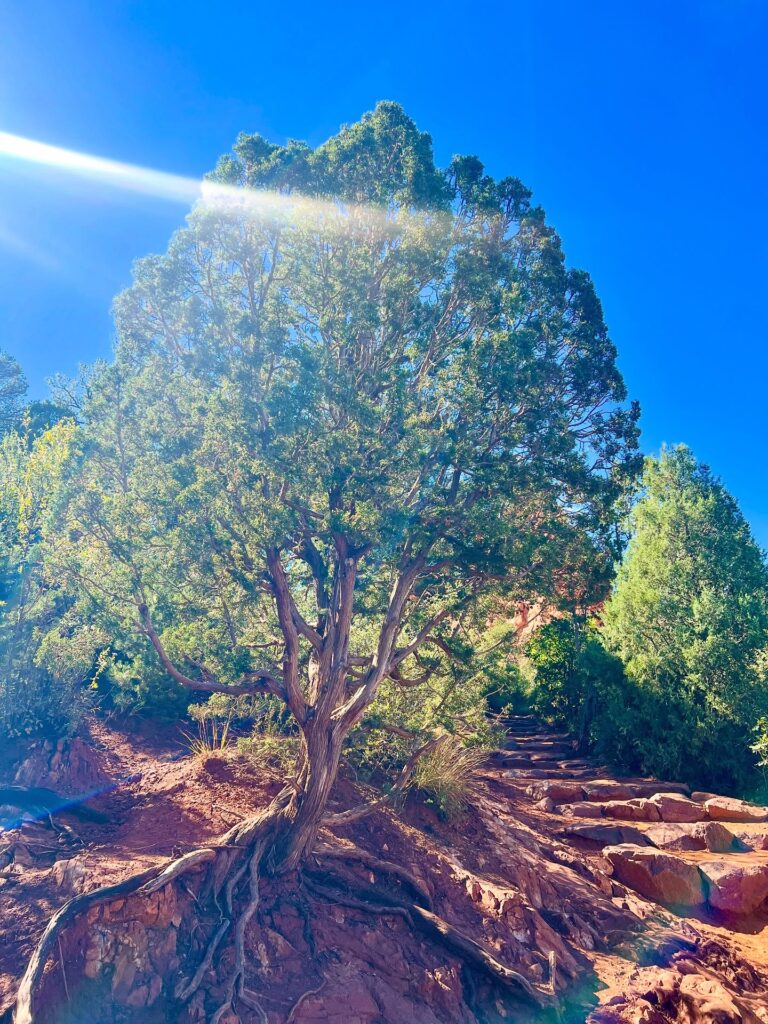
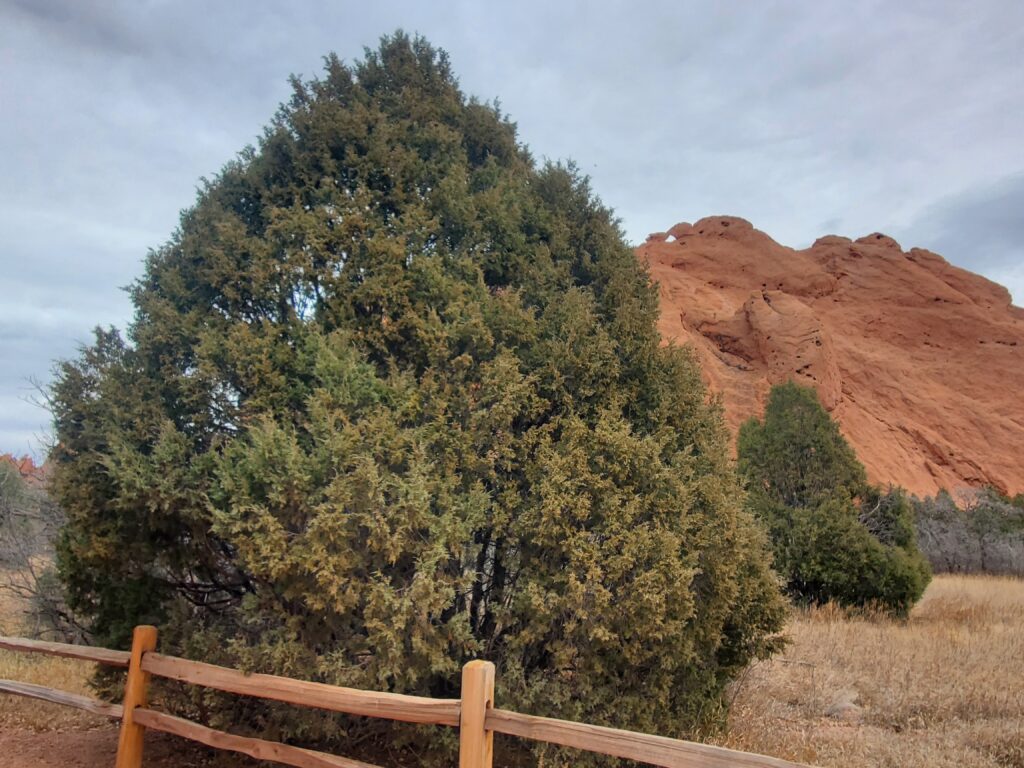
Many of the coniferous trees in the Garden, such as the pines, have long, thin needles for leaves, which are well suited for Colorado’s cold, harsh winters. But looking closer, you may find some trees which, instead of needles, have scales! These scales tell us we have identified a juniper tree!
The Garden of the Gods is home to two confirmed species of juniper – Rocky Mountain Juniper and One Seed Juniper. I bet you can guess where they got their names! One-seed junipers typically only produce one seed per berry, whereas Rocky Mountain Junipers can produce one to three. Rocky Mountain Junipers are typically found in, you guessed it, the Rocky Mountains. They were introduced in the 1930s by the Civilian Conservation Corps to help with erosion control. One-seed Junipers, on the other hand, are native to the Garden. Both species can live for hundreds of years, making them fantastic historians!
As baby trees both grow the needles more typical of coniferous trees (think of our pines again!). Needles tend to be better for photosynthesis, and young trees need more food to grow rapidly (did you know a 2-foot tall One-Seed can have a taproot over 30 feet long?). However, mature adults cover these needles in scales, which (scientists think) are better at retaining water in relatively dry climates.
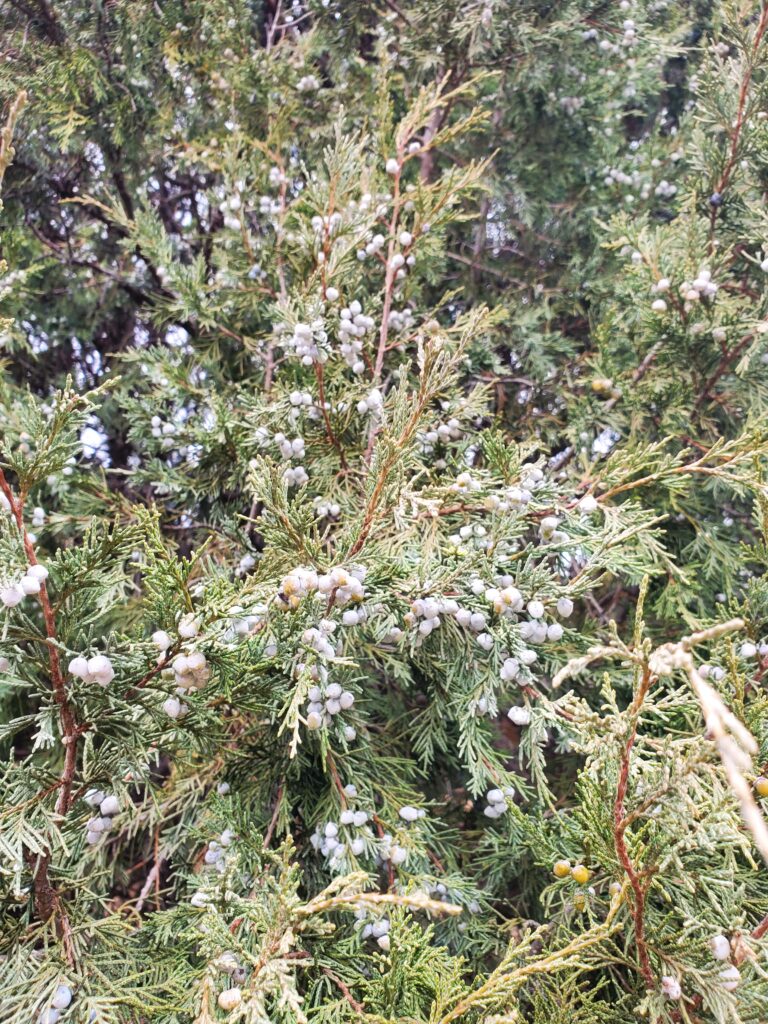
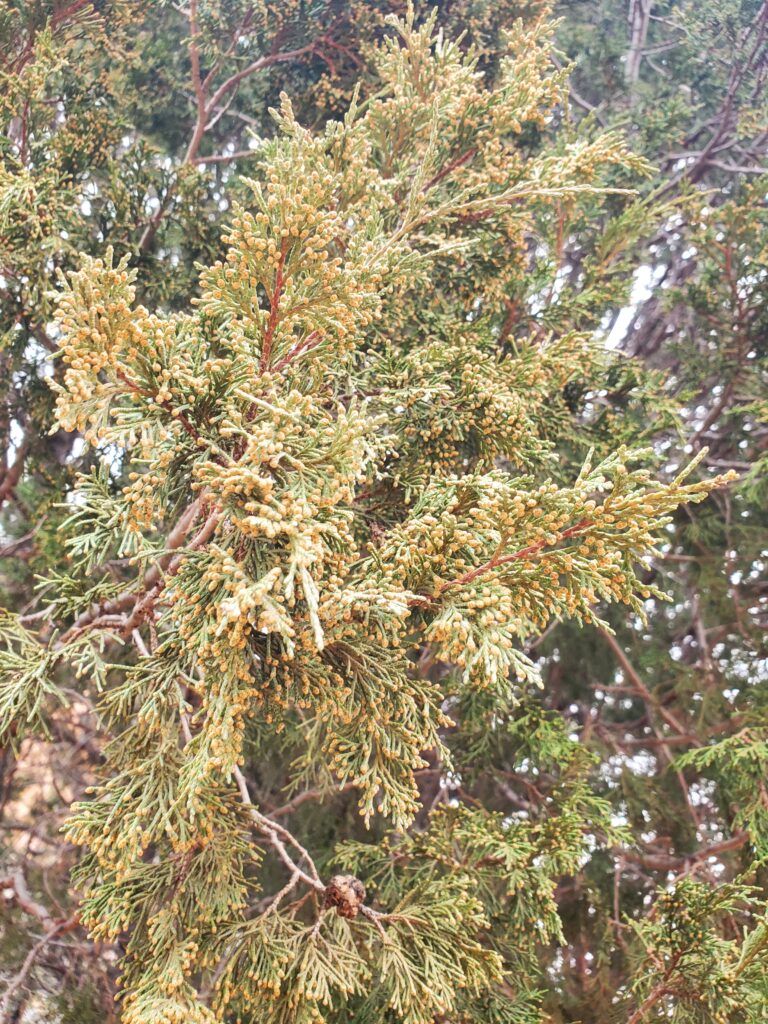
In addition to their unique leaf structure, junipers are amazing because of their method of reproduction. Most plants have both male and female structures within the same individual (most flowers have the parts to produce both pollen [male] and berries [female]). Junipers, however, are gendered – each tree is either a male, which will produce tiny yellow-brown cones on the tips of each scaled needle, or a female, which will develop blue-purple berries.
So next time you hike through the Garden keep your eyes on the sides of the trails. How many junipers can you find? Can you tell if they are male or female? Maybe if you get lucky, these sentinels of time will share with you the secrets of the Garden!